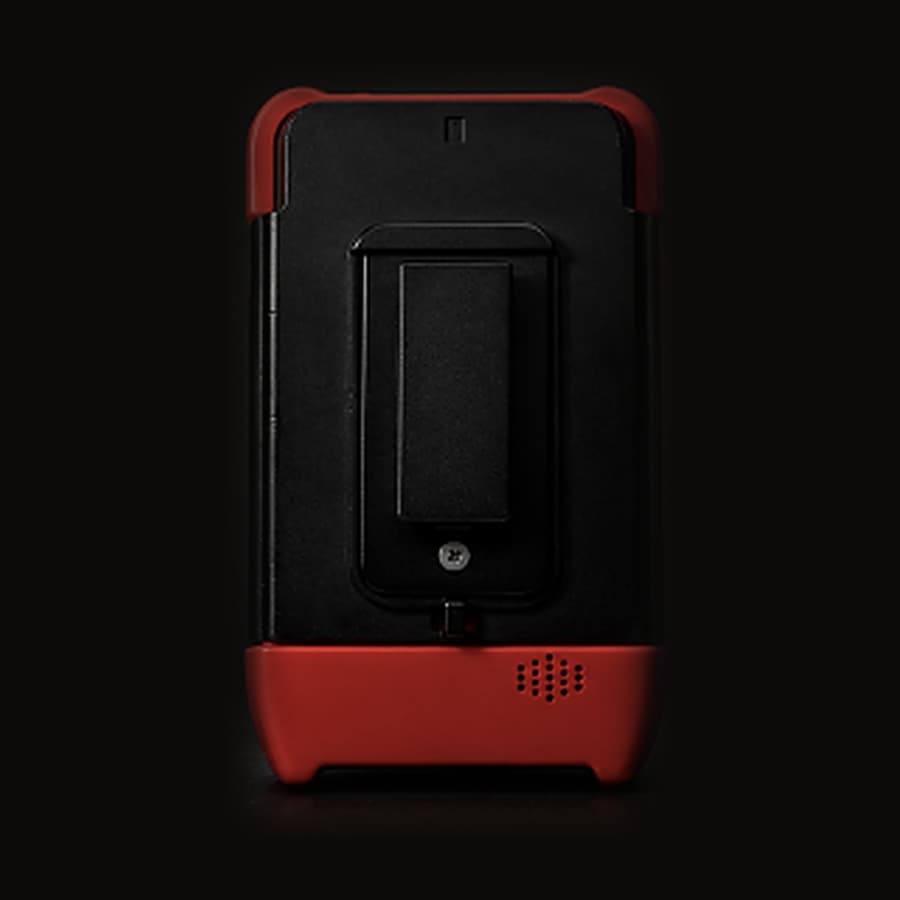
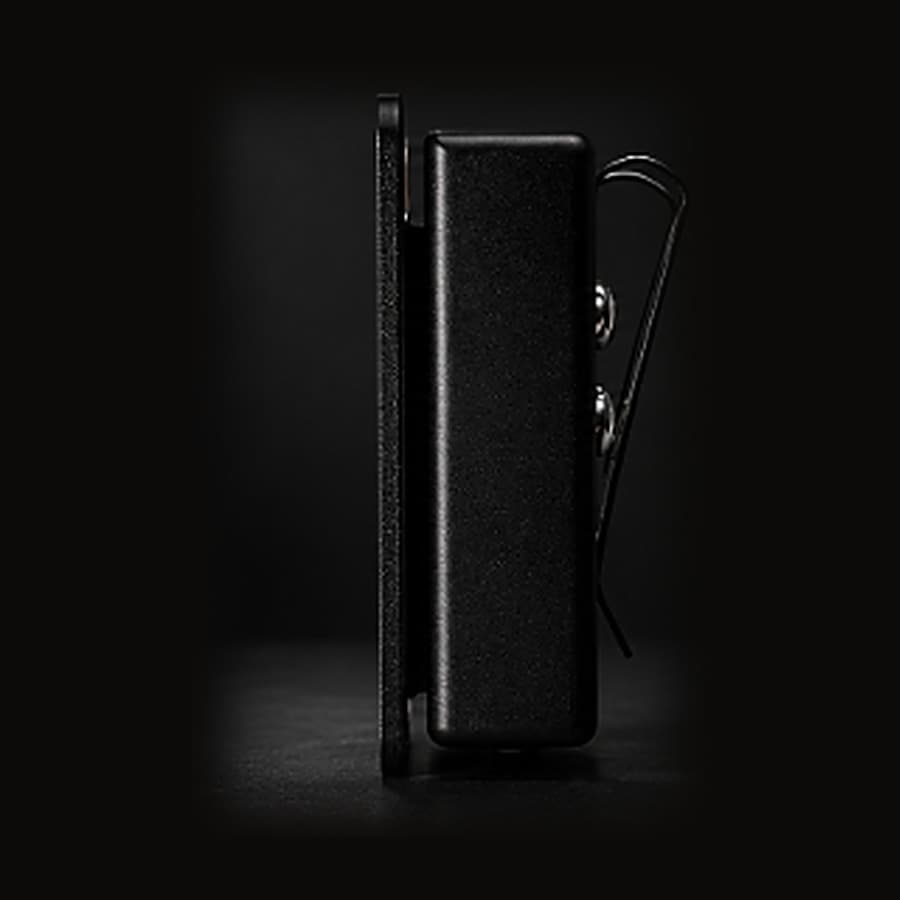
Quick-Clip
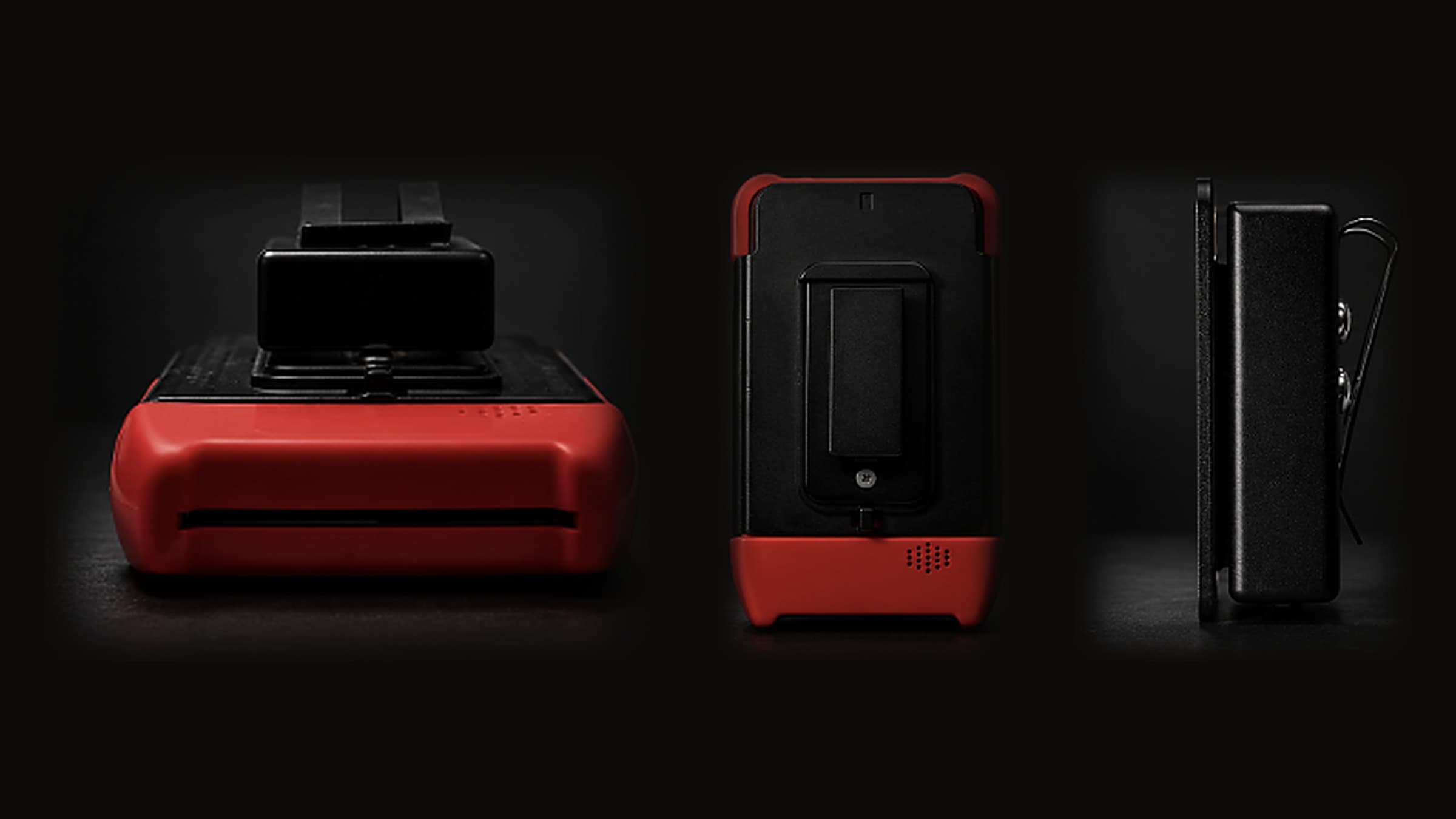
A CNC-machined replacement for a part Chick-fil-A drive-thrus were buying three to five times a year. Two years in service, zero replacements.
- Role
- Founder, designer
- Year
- 2024 to 2026
- Tools
- SolidWorks, CNC manufacturing, Anodized aluminum
- States sold into
- 5
- Stores
- 10
- Units
- 36
- Replacements in 2 years
- 0
Drive-thru crews wear a handheld card reader on their belt for an entire shift, held on by the plastic clip that comes with the reader. That clip is the part that breaks. When it goes, the reader hits the pavement, and a reader costs a great deal more than the clip that was holding it.
Stores were buying replacement clips three to five times a year. I knew about it because I was working front of house and watching it happen.
My first instinct was to reproduce what the factory clip did, twisting action and all. That was the mistake. Once I accepted that the moving part was the failure point and not a feature, the design got simpler and far stronger; a fixed mount with no articulating joint. The difference between a clip that is functional and one that is functional and durable turned out to be the absence of moving parts.
Getting there took ten distinct designs, each with more than twenty variations, and somewhere north of a thousand hours on my 3D printer working through prototypes.
The first CNC batch came back with the screw holes undersized. On a 3D print that would not have mattered. Plastic is soft, so a screw driven into a slightly small hole generates friction, works its way through, and forms threads that fit it. Aluminum will not do that. It is too hard to push out of the way, so an undersized hole either stops the screw or strips the head off it. Every prototype had hidden the mistake for me, and the drawing should have been checked against the actual fastener before the run rather than after.
The same batch also came back too shiny. Raw aluminum looked like a prototype sitting on a counter. Sandblasting and then anodizing gave it the flat, deliberate surface it needed to read as a product.
The second order came back right on both counts, and that was the version ready to scale to a bulk run of fifty.
I pitched Chick-fil-A leadership myself and ran the sales cycle end to end. It ended up in ten stores across five states: North Carolina, Georgia, Michigan, California, and Maryland. That is 36 units in total, with North Carolina the deepest at 26 units across three stores.
There was no clever method behind finding customers. I looked stores up, called them, and asked whether the standard clip was giving them trouble. Every single person said yes, and most were interested.
What hurt was timing. A newer card reader was already on the way and I did not find out until I was well into manufacturing, which made the clip a harder sell to anyone who was about to replace their hardware anyway. The stores that bought mine were the ones that opted out of the new machines.
I ran the business as Charlie's Innovations from May 2024 to March 2026.
The original design has been in service two years with zero replacements, against the three to five a year it replaced. I entered it in the 2026 James Dyson Award.