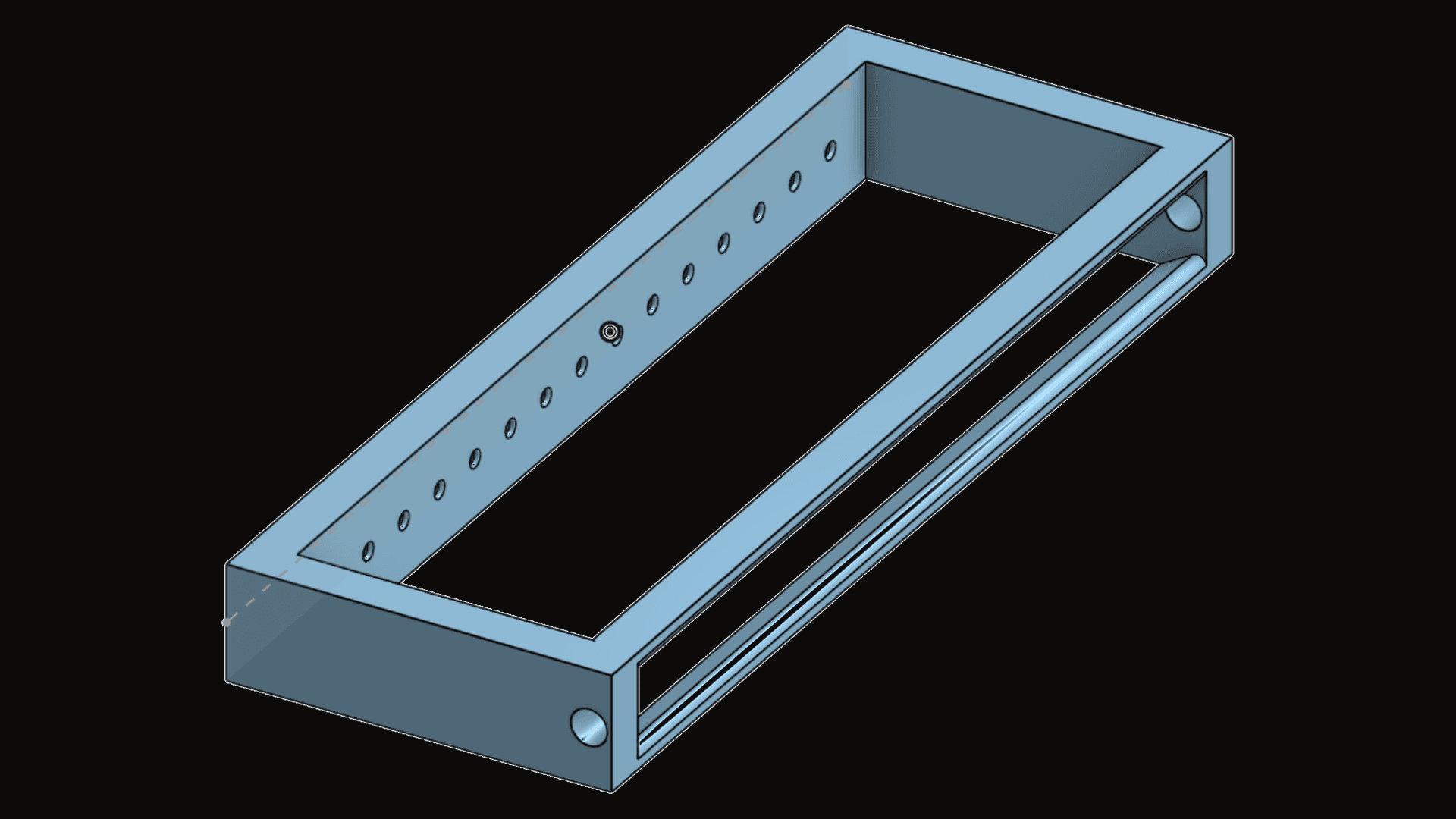
Ionic Wind Thruster
A high-voltage thruster with no moving parts, tuned by electrode spacing to 0.7–1 m/s of measured airflow.
- Role
- Solo build
- Year
- 2025
- Tools
- DC power supply, Anemometer, CAD
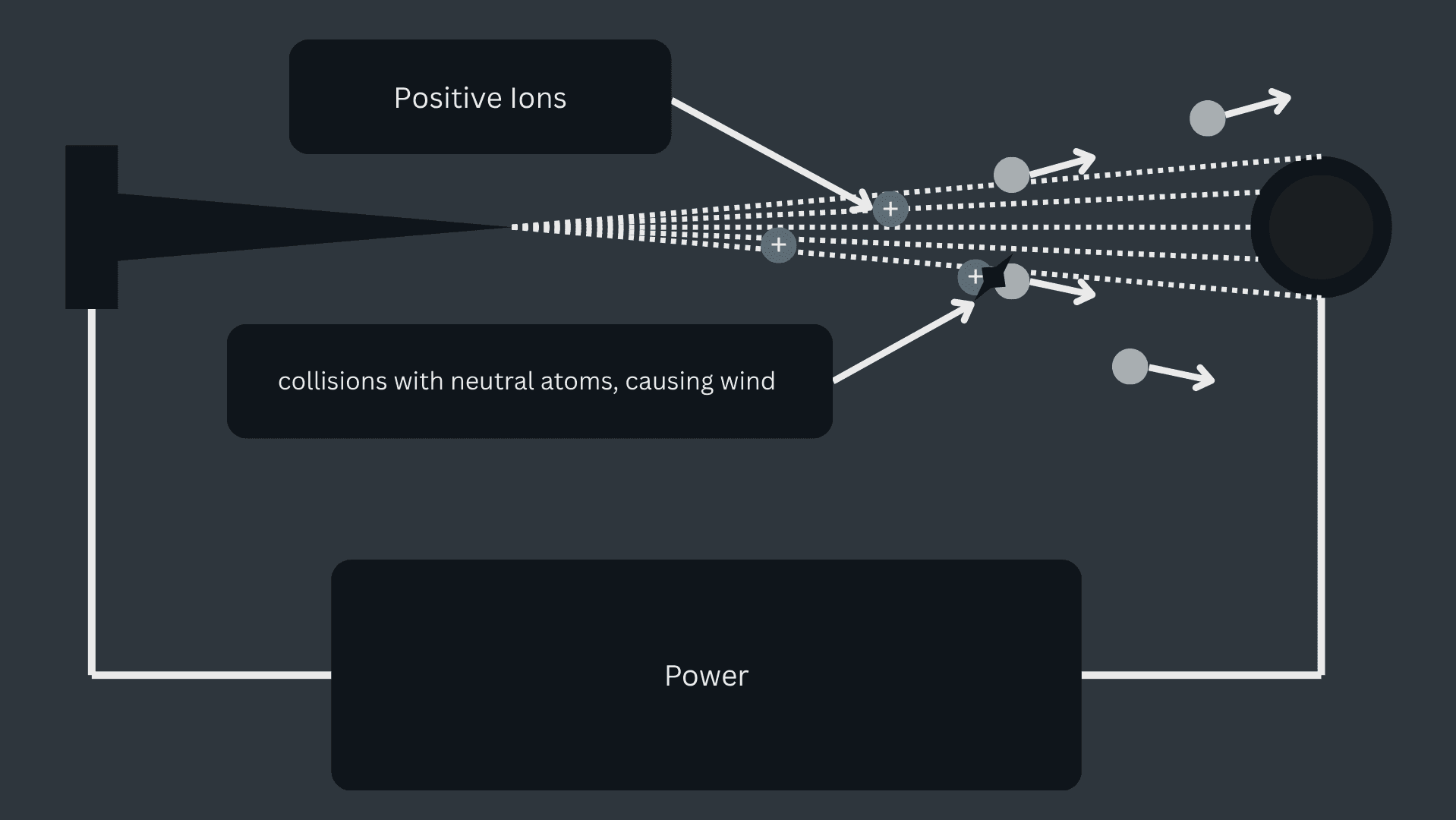
An ionic wind thruster moves air with a high-voltage field instead of a propeller. Ionized molecules accelerate toward the collector electrode and drag neutral air along with them. Nothing rotates, nothing wears.
I built the rig with adjustable spacing between the positive and negative terminals, which made electrode gap the variable I could actually sweep, and measured the result on an anemometer. It settled between 0.7 and 1 m/s.
I expected two thrusters run in sequence to compound, since the air is already moving when it reaches the second stage and the second should have a head start. In practice they would not stay in sync, and the gain was not what stacking the airflow suggested it should be.
The adjustable electrode mount was as much a safety decision as an experimental one: it let me change the gap without reaching into a live gap. I kept current under the rig's specified limit, wore an anti-static wrist strap throughout, and wired an emergency cutoff within reach before energizing anything.